Oxygen Absorbers vs Desiccants: Which Do You Need?
They solve different problems: absorbers remove oxygen, desiccants remove moisture. When to use each for food storage, and when you need both.
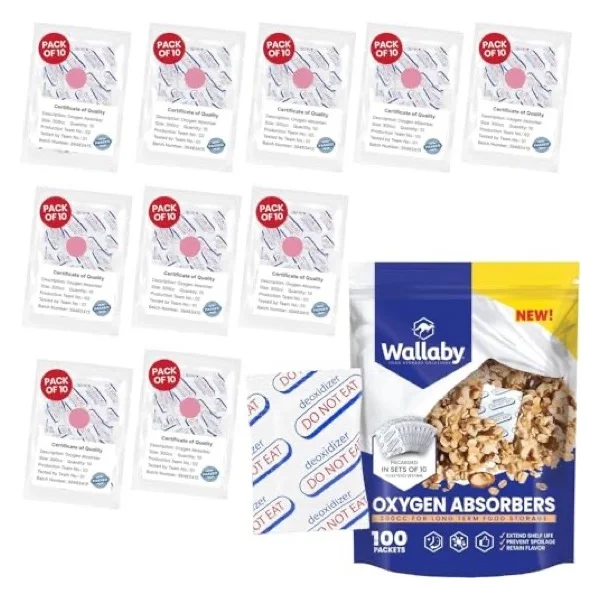
These two little packets look similar and get confused constantly, but they do opposite jobs. Using the wrong one, or both when you need one, wastes money and can undercut your storage.
What each one does
- Oxygen absorbers remove the oxygen from a sealed container. Without oxygen, fats oxidise far more slowly and insects cannot survive, which is what lets dry staples last for decades. This is the workhorse of long-term food storage.
- Desiccants (like silica gel) remove moisture from the air inside the container. They keep already-dry things crisp, but they do nothing about oxygen.
Which does your food need?
| Food | Use |
|---|---|
| Dry staples: rice, beans, oats, pasta | Oxygen absorber |
| Flour, powdered milk | Oxygen absorber |
| Dehydrated snacks, jerky, gear | Desiccant (moisture control) |
| Sugar or salt | Neither (seal dry, no absorber) |
For the vast majority of dry-food storage, the answer is an oxygen absorber, because low-moisture staples are already dry enough; the problem to solve is the oxygen.
Why you rarely want both
Adding a desiccant to already-dry staples is not just unnecessary, it can be counterproductive: it takes up space, adds cost, and does nothing the oxygen absorber is not already handling. Reserve desiccants for the specific case of controlling humidity in something that genuinely needs it, like dehydrated food in a humid climate.
The one exception, again
Sugar and salt get neither. An oxygen absorber fuses them into a brick, and they do not need moisture control if sealed dry. Seal them plain, on their own.
For long-term dry-food storage, reach for oxygen absorbers, not desiccants: removing the oxygen is what protects staples for decades. Desiccants are for controlling moisture in already-dry items. They solve different problems, and most staple storage needs only the absorber.
Frequently asked questions
Do I need both oxygen absorbers and desiccants?
Usually not. Properly dry staples like rice and beans need an oxygen absorber to remove the air, and adding a desiccant is unnecessary because the food is already low-moisture. Use a desiccant only when the specific item needs active moisture control.
What is the difference between an oxygen absorber and a desiccant?
An oxygen absorber removes oxygen from the sealed container to prevent oxidation and pests; a desiccant, like silica gel, removes moisture to keep dry items crisp. One targets air, the other targets humidity, so they are not interchangeable.
Can you use silica gel packets for food storage?
Food-safe desiccants control moisture, which suits already-dry snacks or gear, but they do nothing about oxygen. For long-term storage of dry staples, an oxygen absorber is the correct choice, not silica gel.
Some links are affiliate links: if you buy through them we may earn a commission at no extra cost to you. It never changes our rankings. Full disclosure.