Best Fermentation Weights: Glass vs. Ceramic vs. Makeshift
The weight's only job is to keep vegetables under the brine. Glass, ceramic, and DIY options compared, and which to actually buy.
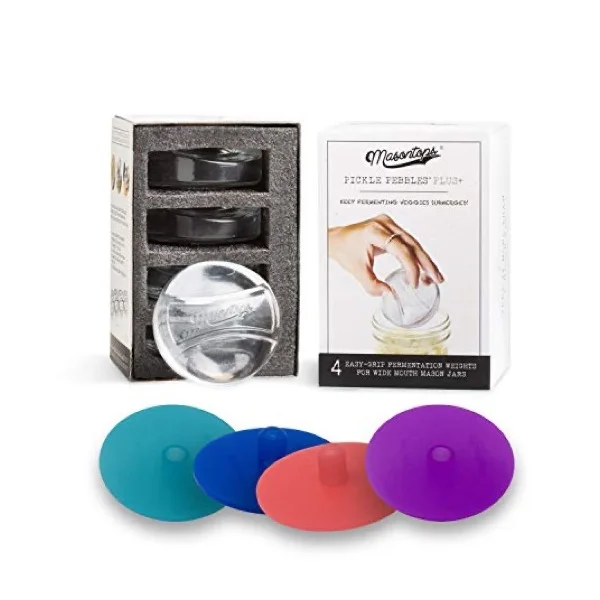
Fermentation weights get overthought. Their entire job is to hold the vegetables beneath the brine, because anything that floats above the surface is where mould and kham yeast grow. Get submersion right and almost any solid, food-safe weight works.
| Type | Verdict |
|---|---|
| Glass weights | Best for jars: inert, easy to clean, sized for wide-mouth |
| Glazed ceramic | Great in crocks; comes with most water-seal crocks |
| Water-filled zip bag | Works in a pinch, but leaks and tips; not for regular use |
| Boiled rock / small dish | Fine occasionally if truly food-safe and heavy enough |
Why glass wins for jars
Glass is non-reactive, doesn't stain or hold odours, goes in the dishwasher, and the purpose-made discs are sized to sit flat inside a wide-mouth Mason jar under an airlock lid. That combination, a glass weight plus a one-way airlock, is the core of a reliable jar ferment and what our beginner's guide recommends.
Ceramic and crocks
If you ferment in a water-seal crock, it almost always comes with glazed ceramic weights shaped to the vessel. Those are excellent and you won't need anything else. Ceramic is just as inert as glass; the only reason glass leads for jars is fit and price.
The weight matters less than the submersion. A cheap glass disc that keeps everything under the brine beats a fancy weight that lets a cabbage leaf float. Fit and coverage are what count.
What to skip
Avoid anything reactive (bare metal), anything that might not be food-safe, and makeshift water bags for anything you do often, since a leak dilutes and ruins the batch. Match the weight to your jar mouth, wide or regular, so it actually holds the food down.
The verdict
Buy glass weights for Mason-jar fermenting and use the ceramic weights that come with a crock. Both do the one thing that matters: keep the vegetables under the brine. Everything else is detail.
Glass weights are the best pick for jar fermenting, inert and easy to clean, and the glazed ceramic weights that come with crocks are just as good. Skip leaky makeshift options for regular use. The weight's real job is keeping vegetables submerged, so prioritise fit and full coverage over anything fancy.
Frequently asked questions
What kind of fermentation weight is best?
Glass weights are the best all-round choice for jar fermenting: inert, easy to clean and sized to drop into a wide-mouth jar. The glazed ceramic weights that come with crocks work just as well; both keep vegetables under the brine.
Can I use a makeshift fermentation weight?
You can, but avoid the risky ones. A zip bag of water can leak and dilute the brine, and rocks or non-food items may not be food-safe. A cheap glass weight removes the guesswork.
Why do I need a weight when fermenting?
To hold the vegetables under the brine. Anything above the surface is exposed to air, which is where mold and kahm yeast form, so a weight is the simplest way to prevent that. Keeping food submerged is the core rule of safe fermenting.
Some links are affiliate links: if you buy through them we may earn a commission at no extra cost to you. It never changes our rankings. Full disclosure.