What Size Fermentation Crock Do I Need?
What size fermentation crock you need: match capacity to your batch, from a half-gallon test to a 3-gallon harvest, with a simple sizing table.
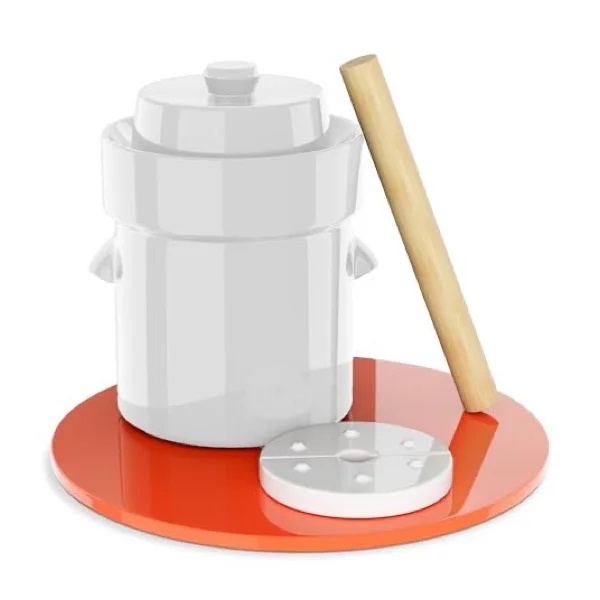
At a glance
| Product | Score | Seal & Airlock | Capacity & Kit | Build Quality | Owner Satisfaction | Value | Buy |
|---|---|---|---|---|---|---|---|
| Humble House Sauerkrock 1.3-Gallon Water-Seal Crock (Kit) Humble House · mid-range | 88 | 92 | 100 | 98 | 80 | 77 | Buy → |
| Humble House Sauerkrock 1/2-Gallon Water-Seal Crock (Kit) Humble House · value | 84 | 98 | 96 | 80 | 80 | 72 | Buy → |
| Ohio Stoneware 3-Gallon Fermentation Crock Set Ohio Stoneware · premium | 81 | 77 | 89 | 98 | 78 | 64 | Buy → |
Match the crock to the batch
The right crock size is set by how much you ferment at once. Buy too small and you run batches back to back; buy too big and a half-empty crock leaves more air and surface for the ferment to go wrong. A good rule is to pick a crock you will fill about three-quarters full.
The sizing table
Sauerkraut is the usual yardstick, since cabbage packs down tightly. As a rough guide, allow about 5 lb of cabbage per gallon of crock capacity, filled to three-quarters.
| Crock size | Cabbage (approx) | Good for |
|---|---|---|
| 0.5 gallon | 2 to 3 lb | A test batch, one small head |
| 1 to 1.3 gallon | 5 to 8 lb | Regular family batches |
| 2 to 3 gallon | 12 to 18 lb | Big harvests, large households |
| 5 gallon and up | 25 lb and up | Preserving a whole garden |
Why bigger is not always better
A large crock run half-full has a lot of exposed surface and headspace air, which is what encourages kahm yeast and mold. If you mostly do small, frequent batches, a half-gallon or one-gallon crock ferments more reliably than a three-gallon one used occasionally.
Water-seal or open crock
Most modern crocks, like the Humble House Sauerkrock, use a water-seal moat: you pour water into a channel and the lid sits in it, so gas bubbles out while air and flies stay out. Traditional open crocks such as the Ohio Stoneware type use a plate and weight stones and need closer watching. Both work; the water-seal is the lower-effort choice.
The pick by household
For most people a 1 to 1.3-gallon water-seal crock is the sweet spot: enough for a proper batch of kraut, kimchi or pickles without towering over the counter. Drop to a half-gallon for testing or a small household, and step up to 3 gallon only if you preserve harvests in bulk. Keep everything under the brine with the included weights, and for food-safety questions follow USDA, the NCHFP and your local extension service. See how to make sauerkraut and how much salt to use.
Size the crock to your batch and fill it about three-quarters full, roughly 5 lb of cabbage per gallon. A 1 to 1.3-gallon water-seal crock suits most households; a half-gallon is for testing, and 2 to 3 gallon for bulk harvests. Bigger is not better if it sits half-empty.
Frequently asked questions
What size crock do I need for sauerkraut?
Allow about 5 lb of cabbage per gallon of crock capacity, filled to three-quarters. A half-gallon crock takes one small head (2 to 3 lb), a 1 to 1.3-gallon crock suits regular family batches (5 to 8 lb), and a 3-gallon crock handles a big harvest.
Is a bigger fermentation crock better?
Not if it sits half-empty. A large crock run below its level leaves more surface air and headspace, which encourages kahm yeast and mold. Match the crock to how much you actually ferment at once, and fill it about three-quarters.
Do I need a water-seal crock or an open one?
A water-seal crock, with a water moat around the lid, vents gas while keeping air and flies out and needs little attention, which makes it the easier choice. Open crocks with a plate and weight work well too but need closer watching to keep the surface clean.
Some links are affiliate links: if you buy through them we may earn a commission at no extra cost to you. It never changes our rankings. Full disclosure.