Mylar Thickness Explained: 3.5 vs 5 vs 7 Mil
Thicker mylar isn't automatically better. What 3.5, 5 and 7 mil each mean, and how to pick the right one for how you'll store food.
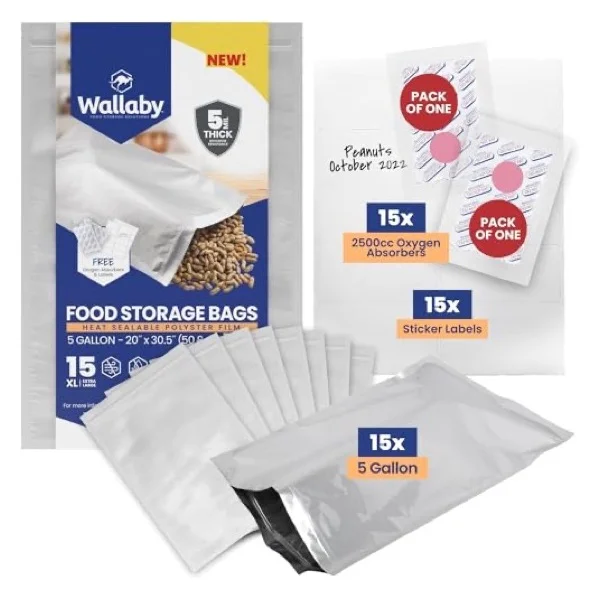
One of the most common mylar questions is which thickness to buy, and the honest answer is that thicker is not always better, just more durable. Here's what the numbers mean.
| Thickness | Best for | Bucket liner? |
|---|---|---|
| 3.5 mil | Short-to-medium term, gentle shelf storage | No |
| 5 mil | The everyday long-term standard, most staples | Not ideal |
| 7 mil | Heavy-duty, rough handling, the 25-year benchmark | Yes |
Mil is durability, not shelf life
A "mil" is one thousandth of an inch. A thicker bag resists punctures and pinholes better, and that's the whole point, because a single pinhole lets oxygen back in and quietly ruins the seal. What actually preserves the food is removing the oxygen with an absorber. So mil doesn't set the shelf life; it sets how reliably the bag protects that shelf life while it's handled, stacked and stored. Our shelf-life calculator shows the food side of the equation.
When to use each
- 3.5 mil: fine for a bag you'll open within a few years and keep on a shelf undisturbed. Too thin to trust for decades or inside a bucket.
- 5 mil: the sweet spot for most people. A strong barrier that realises the full shelf life of your staples when sealed well and kept cool.
- 7 mil: the choice when bags get moved, stacked, or dropped into a bucket as a liner. The extra thickness is cheap insurance against pinholes.
Match the mil to the handling, not the food. The food decides the years; the mil decides whether a bag that's been shuffled around for a decade still holds its seal.
The verdict
Buy 5 mil for general long-term storage, 3.5 mil only for short-term shelf use, and 7 mil for bucket liners and anything that gets handled. See the full range in our mylar bag rankings.
Thickness is about durability, not shelf life. Use 5 mil as your default for long-term staples, 3.5 mil only for short-term gentle storage, and 7 mil for bucket liners and rough handling. The oxygen absorber preserves the food; the mil just keeps the bag intact long enough to matter.
Frequently asked questions
Is thicker mylar better?
Not automatically. Thickness sets durability and puncture resistance, not shelf life, which comes from removing the oxygen. Match the mil to how the bag will be handled rather than assuming thicker is always better.
What is 5 mil mylar best for?
5 mil is the everyday long-term standard, a strong oxygen and light barrier suited to most staples stored on a shelf. It is the right default for the majority of home food storage.
Do you need 7 mil mylar for buckets?
7 mil is the safest choice for bucket liners and any bag that gets moved and stacked, because it resists the pinholes and punctures that let oxygen back in. It is the usual choice for the longest-term storage.
Some links are affiliate links: if you buy through them we may earn a commission at no extra cost to you. It never changes our rankings. Full disclosure.