Mylar Bags vs. Vacuum Sealing: Which Keeps Food Longer?
Mylar with an oxygen absorber keeps dry staples for decades; vacuum sealing wins for the freezer. How to choose, and when to use both.
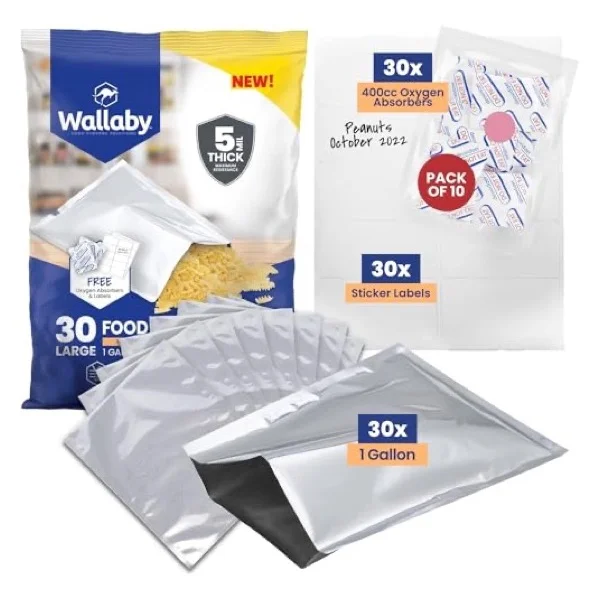
Two of the most common ways to store food at home look similar (squeeze out the air, seal it up), but they solve different problems, and choosing the wrong one is how people end up with rancid rice or a freezer full of bags that didn't buy them any real time.
| Mylar + oxygen absorber | Vacuum sealing | |
|---|---|---|
| Best for | Dry staples for the long haul | Fridge, freezer and short-to-mid term |
| Typical shelf life | 25–30 years for low-oil staples | Months to a few years |
| Removes oxygen | Yes, down to ~0.01% with an absorber | Partly: pulls most, not all, air |
| Blocks light | Yes (opaque foil) | No (clear plastic) |
| Reusable | No (cut and reseal shrinks the bag) | Rolls are single-use; jars reusable |
| Upfront cost | Bags + absorbers only | A machine, then bags |
| Weak point | No good for moist or oily foods | Doesn't stop rancidity or freezer burn forever |
They remove air in different ways, and that matters
Vacuum sealing pulls the air out mechanically and heat-seals the bag. It removes most of the air, but not the last of the oxygen, and clear plastic lets light in. That's plenty for the fridge or freezer, or for keeping coffee and snacks fresh for weeks to months.
Mylar works differently. The bag itself is a foil laminate that blocks light and is a far better oxygen barrier than plastic, and you drop an oxygen absorber inside before sealing, which scavenges the oxygen that's left down to a fraction of a percent. That combination is what takes rice, wheat and beans from a year on the shelf to decades.
The distinction in one line: vacuum sealing removes air now; mylar plus an absorber keeps oxygen out for good. Only the second one stores food for decades.
When mylar wins
For dry, low-oil staples you want to forget about for years (white rice, wheat, dried beans, oats, pasta, sugar), mylar with an absorber is the clear choice. It's also cheaper to scale: you're buying bags and absorbers, not running a machine, and a stack of sealed bags drops straight into a food-grade bucket for pest protection. Our shelf-life calculator shows what each food realistically gets.
When vacuum sealing wins
For anything you'll actually eat this year (meat and fish headed for the freezer, cheese, leftovers, sous-vide prep, opened dry goods), vacuum sealing is the better tool. It's fast, the bags conform to the food, and you can portion exactly. It also shines for pantry jars: a jar sealer vacuum-seals a Mason jar of flour or nuts you dip into weekly. What it won't do is stop oils from going rancid or prevent freezer burn indefinitely: air removal slows those, it doesn't cancel them.
The honest answer: use both
These aren't rivals. A well-stocked kitchen uses vacuum sealing for the freezer and the things it opens often, and mylar-plus-absorbers for the deep-storage staples it hopes never to touch. Match the method to the timeline, months versus decades, and neither your food nor your money goes to waste.
Mylar plus an oxygen absorber is for the long haul: dry, low-oil staples measured in decades. Vacuum sealing is for the near term, the freezer and the jars you open often. Choose by timeline, not by which looks more airtight.
Frequently asked questions
Which lasts longer, mylar bags or vacuum sealing?
For dry, low-oil staples like rice, beans and wheat, mylar with an oxygen absorber lasts far longer, into the decades, because it blocks light and oxygen. Vacuum sealing is for the near term and the freezer, typically a year or two.
Can you vacuum seal food for long-term storage?
For years-long dry storage, mylar plus oxygen absorbers is the better tool, because thin vacuum plastic still lets a little oxygen through over time and does not block light. Vacuum sealing shines in the freezer and for foods eaten within a year or two.
Should I use mylar and vacuum sealing together?
They solve different problems, so most people pick one per job. Use mylar with oxygen absorbers for pantry staples stored for years, and vacuum sealing for the freezer and shorter-term portions.
Some links are affiliate links: if you buy through them we may earn a commission at no extra cost to you. It never changes our rankings. Full disclosure.