How to Ferment Garlic (Safely, in Brine)
Fermented garlic is mellow and tangy. The simple brine method that keeps it safe, the airlock gear that helps, and the oil method to avoid.
Fermented garlic loses its raw bite and turns mellow, tangy and savoury. It is one of the easier ferments, with one important safety rule: brine, not oil.
The safety rule first
Garlic stored in oil at room temperature is a classic botulism hazard, because the oil creates exactly the low-oxygen environment the bacteria favour. Brine fermentation is different and safe: the salt and the acidity that develop protect the garlic. So ferment garlic in a salt brine, and if you later make a garlic oil, keep it refrigerated and use it quickly. For the specifics, follow NCHFP guidance.
What you need
- Peeled garlic cloves.
- Non-iodized salt: pickling, kosher or sea salt.
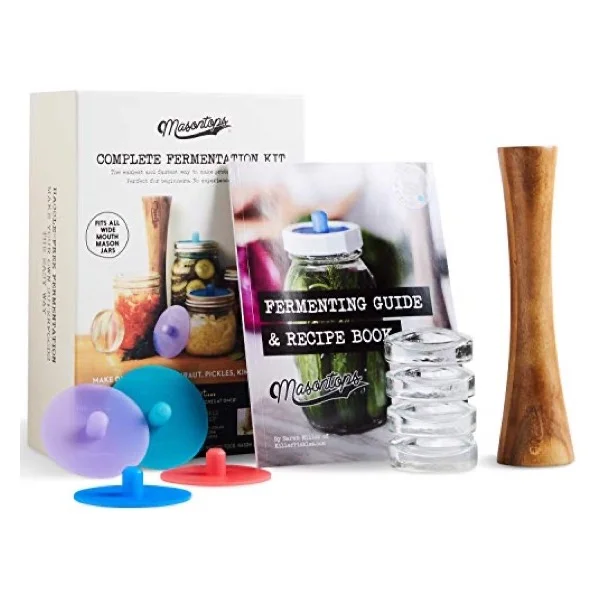
- A jar, a fermentation weight to keep the cloves submerged, and an airlock lid so gas escapes but air does not get in.
The method
- Make a brine at about 3 percent salt: roughly 30 grams of salt dissolved in 1 litre of non-chlorinated water. Our fermentation salt calculator sizes any batch.
- Pack the peeled cloves into the jar and pour the brine over until they are fully covered.
- Set a weight on top so nothing floats above the brine, then fit the airlock lid.
- Leave it at room temperature, out of direct sun, for two to four weeks, tasting as it goes.
Reading it
| Sign | Meaning |
|---|---|
| Bubbles, cloudy brine | Normal, active fermentation |
| Garlic turns blue or green | Harmless colour reaction |
| Fuzzy or coloured mould on top | Discard; start over |
A little white film (kahm yeast) can be skimmed. Keep everything under the brine, which is the single most important habit, covered in our beginner fermenting and troubleshooting guides. Once it tastes right, move it to the fridge.
Fermented garlic is easy and delicious in a salt brine, and the brine plus airlock are what keep it safe. Never ferment or store garlic in oil at room temperature, which is a real botulism risk. Keep the cloves under the brine and lean on NCHFP guidance.
Frequently asked questions
Is fermented garlic safe to make at home?
Brine-fermented garlic, made by submerging cloves in a salt brine, is a traditional and safe method when the garlic stays under the brine and develops acidity. What is not safe is garlic stored in oil at room temperature, a known botulism hazard. Follow NCHFP guidance for the details.
Why does fermented garlic turn blue or green?
Garlic can turn blue or green during fermentation due to a harmless reaction between its compounds and trace minerals or acidity. It looks alarming but is not a sign of spoilage; fuzzy or coloured mould on the surface is the thing to watch for instead.
How long does it take to ferment garlic?
About two to four weeks at room temperature, tasting as you go. It is ready when the cloves are mellow and pleasantly tangy and have lost their raw harshness. Keep it below the brine the whole time and refrigerate once it tastes right.
Some links are affiliate links: if you buy through them we may earn a commission at no extra cost to you. It never changes our rankings. Full disclosure.