How to Ferment Hot Sauce at Home (Beginner Method)
Fermented hot sauce is deeper and tangier than the blended kind. The simple brine method, the gear that keeps it safe, and how long it takes.
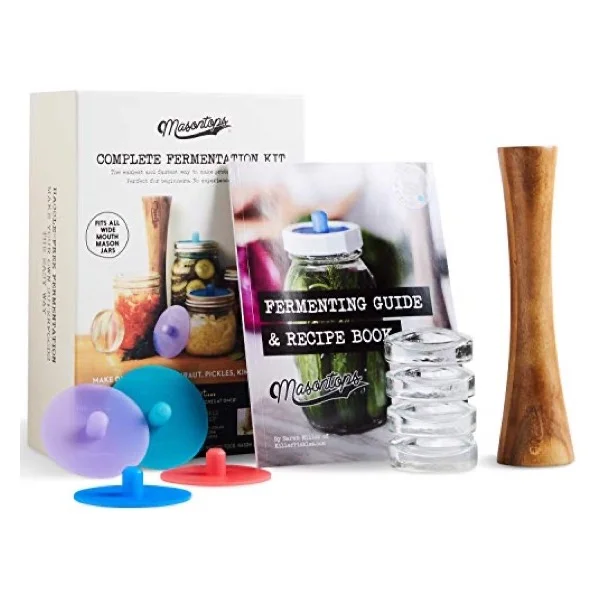
Most bottled hot sauce is just blended peppers and vinegar. Fermenting the peppers first, the way the famous aged sauces are made, builds a rounder, tangier, more complex heat. It is also one of the easiest ferments for a beginner.
What you need
- Fresh chili peppers of your choice, stemmed and roughly chopped (wear gloves for hot varieties).
- A few cloves of garlic, optional but classic.
- Non-iodized salt: pickling, kosher or sea salt.
- A wide-mouth jar, a fermentation weight to hold the peppers down, and an airlock lid so gas escapes but air does not get in.
The method
- Make a brine at about 3.5 percent salt: roughly 35 grams of salt dissolved in 1 liter of non-chlorinated water. Our fermentation salt calculator does the math for any batch size.
- Pack the chopped peppers and garlic into the jar, leaving a couple of inches of headspace.
- Pour the brine over until the peppers are fully covered.
- Set a weight on top so nothing floats above the brine, then fit the airlock lid.
- Leave it at room temperature, out of direct sun, for 1 to 2 weeks.
Reading the ferment
| Day | What you'll see |
|---|---|
| 1 to 3 | Bubbles start; brine turns cloudy. This is normal and good. |
| 4 to 10 | Active fizzing, a pleasant sour-pepper smell. |
| 10 to 14 | Bubbling slows; taste it. Pleasantly sour means it's ready. |
Anything below the brine is protected. A little white film (kahm yeast) on the surface is harmless and can be skimmed; fuzzy, colored mold means start over. Our troubleshooting guide covers the difference.
Blend and bottle
Once it tastes right, blend the peppers with some of the brine to your preferred consistency. Add a splash of vinegar at the end if you want a brighter, more shelf-stable sauce; the vinegar also lowers the pH for safer keeping. Store the finished sauce in the fridge, where it keeps for months.
For the safety question of pH and shelf stability, lean on NCHFP guidance rather than a blog number, especially if you plan to store the sauce at room temperature.
Fermented hot sauce is one of the most forgiving ferments to start with. Get the salt ratio right, keep the peppers under the brine with a weight, and let an airlock do the rest. The result is deeper and more complex than any quick-blended sauce.
Frequently asked questions
How do you ferment hot sauce?
Pack chopped chili peppers and garlic into a jar, cover with about a 3.5% salt brine, keep everything under the brine with a weight, and seal with an airlock lid. Ferment at room temperature for one to two weeks, then blend.
How much salt for fermented hot sauce?
About a 3.5% brine, roughly 35 grams of salt per liter of water. Weigh it for consistency; the salt keeps the ferment safe and crisp while the lactic bacteria develop the flavour.
How long does fermented hot sauce last?
Blended and bottled, fermented hot sauce keeps for months in the fridge, and its acidity helps preserve it. For a shelf-stable bottle you would add vinegar and check the pH; for safety questions, follow USDA or NCHFP guidance.
Some links are affiliate links: if you buy through them we may earn a commission at no extra cost to you. It never changes our rankings. Full disclosure.