How Long Does Vacuum-Sealed Food Last?
Vacuum sealing roughly doubles or triples most shelf lives. Approximate times for meat, cheese, coffee and dry goods, cold and dry.
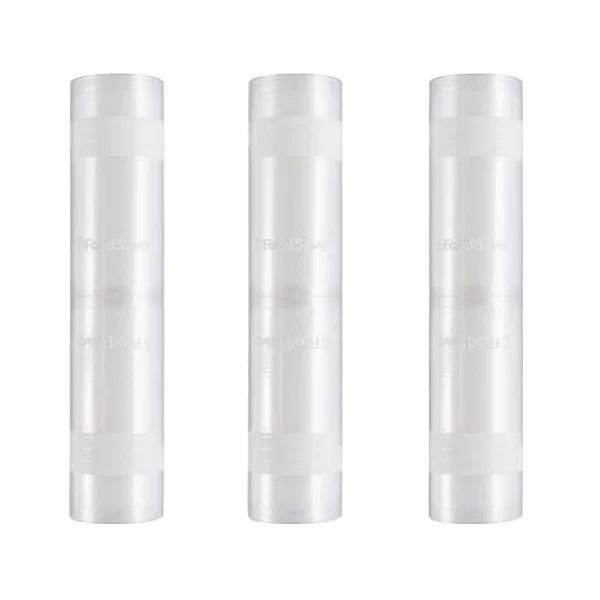
Vacuum sealing extends shelf life by pulling out the air that drives freezer burn, oxidation and staling. It doesn't preserve food on its own, the cold still does the heavy lifting, but it noticeably lengthens how long things stay good. Here are approximate, real-world figures.
| Food | Normal | Vacuum-sealed |
|---|---|---|
| Meat (freezer) | ~6 months | 2 to 3 years |
| Meat (fridge) | 1 to 2 days | 1 week+ |
| Hard cheese (fridge) | 1 to 2 weeks | 4 to 8 months |
| Coffee (pantry) | A few weeks | 6 to 12 months |
| Dry goods (pantry) | Months | Noticeably longer |
These are rough ranges, not guarantees; the exact time depends on the food and how cold it's kept.
Why it lasts longer
Removing the air does two things: it stops the surface drying and ice crystals of freezer burn, and it slows the oxidation that turns fats rancid and coffee stale. Less oxygen means slower spoilage, which is why the sealed column above beats the unsealed one across the board. Choose the right bags or rolls and a good sealer and you get a strong, consistent seal.
Vacuum sealing extends time; it doesn't grant safety. A vacuum-sealed steak still belongs in the fridge or freezer. The seal multiplies the shelf life of properly stored food, it doesn't replace refrigeration.
When you want mylar instead
For dry staples you want to keep for decades at room temperature, vacuum bags aren't the tool: they let light in and don't remove all the oxygen. That job belongs to mylar with an absorber.
The verdict
Expect vacuum sealing to roughly double or triple most shelf lives, with the biggest wins in the freezer. Keep the food cold, use it within the ranges above, and switch to mylar and absorbers when you need years rather than months.
Vacuum sealing roughly doubles to triples most shelf lives by removing air, with the biggest gains in the freezer, where sealed meat can keep 2 to 3 years. It slows spoilage but doesn't make food shelf-stable, so keep it cold, and reach for mylar and oxygen absorbers when you need decades of dry storage.
Frequently asked questions
How much longer does vacuum-sealed food last?
Roughly two to three times longer for most foods, because removing the air slows freezer burn and oxidation. As a rough guide, vacuum-sealed meat keeps about 2 to 3 years in the freezer versus around 6 months loose.
Does vacuum sealing make food safe at room temperature?
No. Vacuum sealing extends quality, not safety, and it does not stop all bacteria, so perishable foods still need the fridge or freezer. Removing air can even suit some harmful bacteria, so never treat sealing as a substitute for refrigeration.
How long does vacuum-sealed food last in the fridge versus the freezer?
The freezer sees the biggest gain, where sealed meat can keep two to three years. In the fridge the extension is smaller, on the order of days to a couple of weeks depending on the food, and it stays a quality window, not a safety guarantee.
Some links are affiliate links: if you buy through them we may earn a commission at no extra cost to you. It never changes our rankings. Full disclosure.