Do You Need Oxygen Absorbers with Vacuum Sealing?
Vacuum sealing and oxygen absorbers do different jobs. When you actually need absorbers, when you don't, and why not to combine them.
This is one of the most common mix-ups in food storage, because both tools are about removing air. But they're built for different jobs and different timelines.
What each one actually does
Vacuum sealing mechanically pulls most of the air out of a bag and heat-seals it. It's fast and great for the fridge, the freezer and dry goods you'll use within months to a couple of years. It does not remove all the oxygen, and clear vacuum bags let light in.
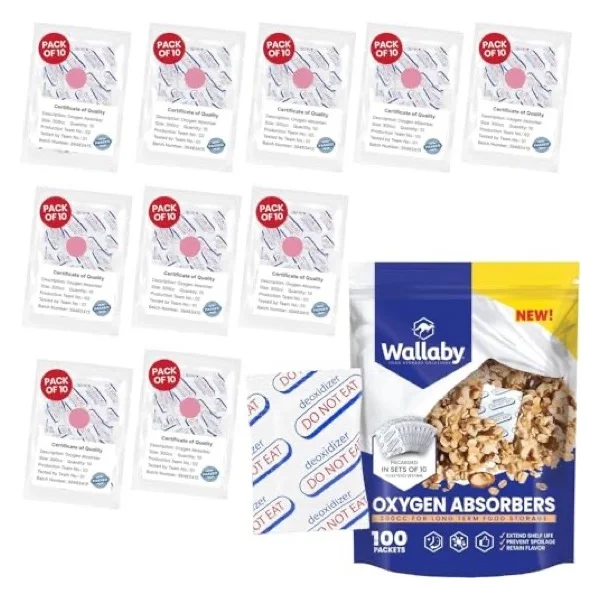
Oxygen absorbers are little iron packets that scavenge the remaining oxygen down to a fraction of a percent. Dropped into a mylar bag, they're what take rice and beans from a few years to decades. See our absorbers vs desiccants explainer for sizing.
When you need absorbers, and when you don't
- Freezer or short-term food in vacuum bags: no absorber needed. The cold and the removed air do the work.
- Long-term dry staples: yes, but in mylar with an absorber, not in a vacuum-sealer bag.
Don't put an absorber in a vacuum bag. It's redundant, and the absorber can pull the little remaining air out and suck the bag down further without adding real shelf life. Absorbers belong in mylar, where there's headspace for them to work.
Why not just do both in one bag?
Because they overlap. Vacuum sealing already removed most of the air; a standard vacuum bag also isn't the high oxygen barrier mylar is, so an absorber inside it doesn't buy the decades you'd get from mylar. For long storage, switch containers rather than stacking tools.
The verdict
Use vacuum sealing for the freezer and the near term, and oxygen absorbers in mylar for the long term. You don't combine them: pick the method that matches how long you need the food to last.
No, oxygen absorbers aren't needed in vacuum-sealer bags. Vacuum sealing handles the freezer and short-term storage; oxygen absorbers, used in mylar, handle decades-long dry storage. Match the method to the timeline instead of stacking both in one bag.
Frequently asked questions
Do you put oxygen absorbers in vacuum-sealed bags?
No, that is not the intended use. Vacuum sealing already removes most of the air for fridge, freezer and short-term storage, while oxygen absorbers are for the sealed mylar bags used in long-term dry storage. Different tools, different jobs.
Vacuum sealing or oxygen absorbers for long-term storage?
For years-long dry storage, oxygen absorbers in mylar bags are the right choice, since they remove the residual oxygen a vacuum cannot and the mylar blocks light and moisture. Vacuum sealing suits the freezer and shorter-term use.
Does a vacuum sealer remove all the oxygen?
No, it removes most of the air but leaves a little behind, and thin bags let some oxygen back in over time. That residual oxygen is fine for months in the freezer but not for decades, which is where oxygen absorbers and mylar come in.
Some links are affiliate links: if you buy through them we may earn a commission at no extra cost to you. It never changes our rankings. Full disclosure.